
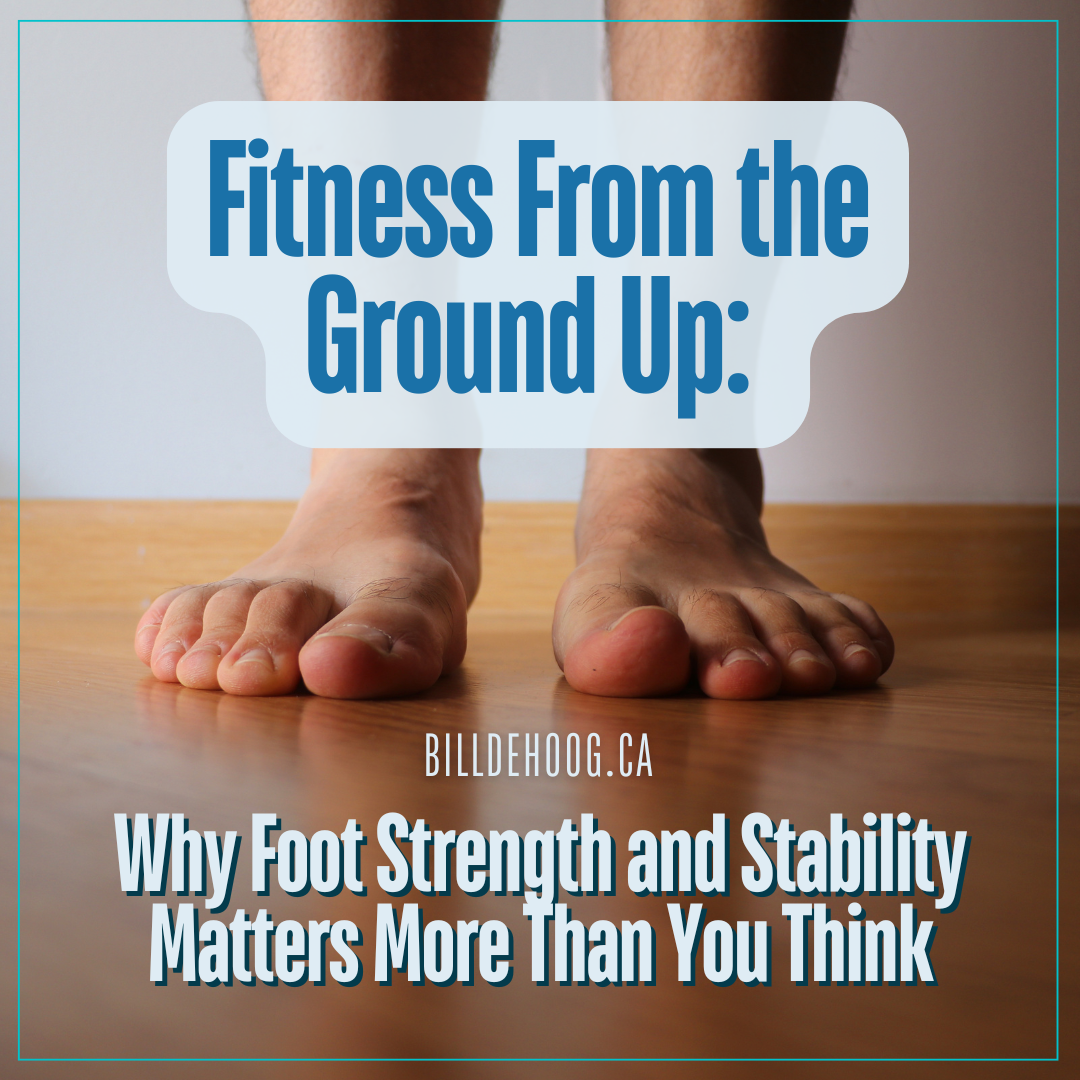
From the Ground Up: Why Foot Strength and Stability Matters More Than You Think.
When most people think about improving their health and fitness, they almost always focus on the obvious areas: building stronger muscles, improving cardio, or strengthening their core.
But there’s an often overlooked part of the body that quietly supports every movement you make…
Your feet!
Strong, stable feet are the very foundation of a strong, stable body. When they work well, everything above them tends to move and feel better. But when they don’t - problems can begin to show up in places you might not expect: like your knees, hips, back, and often your balance.
Have you been feeling achy or off-balance?
If you want to stay active, mobile, and confident in your movement as the years go by, the place to start is often right beneath you.
Let’s jump in, feet first.
The Brain - Foot Connection
Your feet contain thousands of nerve endings that constantly communicate with your brain. Every single step you take sends information about balance, surface stability, pressure, and body position. This feedback system helps your brain make quick adjustments to keep you upright and stable.
To simplify - think of your feet as sensors for your whole body.
When those sensors are working well - with strong muscles and healthy movement, your brain receives clearer signals, which allows your body to respond quickly and efficiently. But when feet become weak, stiff, or overly supported by shoes that do all the work, that communication can start to decline.
The result?
Less stability, slower reaction time, and a greater risk of losing balance.
Why Balance Matters More As We Age
“Without a strong foundation, you’ll have trouble creating anything of value” - Bill deHoog
Balance isn’t just about standing on one leg - it’s about maintaining control of your body while moving through everyday life.
Things like:
Walking down stairs.
Stepping off a curb.
Reacting and turning quickly.
Reaching for something on a shelf.
As we age, balance naturally becomes more important because muscle strength, reaction time, and coordination can gradually decline if they’re not regularly trained and maintained.
The good news is that balance is highly trainable, and one of the best places to improve it is at… the feet!
Stronger feet improve the body's ability to stabilize itself, react to uneven surfaces, and maintain confidence while moving.
For many people, strengthening the feet is one of the simplest ways to improve stability and reduce the risk of falls.
How Weak Feet Affect the Entire Body
The body works as a chain - when one link isn’t functioning well, other parts have to compensate.
Weak or unstable feet can lead to issues that show up higher up in the body.
Common examples include:
Knee discomfort:
When the arches collapse or the foot rolls inward, the knee often follows.
Hip instability:
Poor foot control can change how the hips stabilize the body during walking.
Lower back strain:
If the body’s foundation isn’t stable - the back may work harder to maintain posture and movement.
Often, people are surprised to discover that improving foot strength can help relieve discomfort in other parts of the body, because restoring strength at the foundation allows the entire system to move more efficiently.
Three Simple Exercises to Strengthen Your Feet
Thankfully, improving foot strength doesn’t require complicated equipment or intense workouts - and just a few minutes a day can make a noticeable difference.
Here are three simple exercises Bill suggests that you can start today:
1. Toe Spreading
Sit or stand and gently spread your toes apart as wide as possible.
Hold for 5 seconds and relax.
Repeat 10 times.
This helps activate the small stabilizing muscles in the feet that often become weak from years of tight footwear.
2. Single-Leg Balance
Stand tall and lift one foot slightly off the ground.
Try to hold your balance for 20–30 seconds.
Switch sides.
If you want to increase the challenge, try closing your eyes or standing on a softer surface.
This exercise strengthens both the feet and the stabilizing muscles throughout the whole body.
3. Calf Raises
Stand with your feet hip-width apart.
Slowly lift your heels off the ground, rising onto your toes.
Lower back down slowly.
Repeat 10 - 15 times.
This exercise strengthens the calves and helps support the arch of the foot.
Small Habits That Make a Big Difference
Beyond exercises, simple daily habits can help improve your foot strength and stability.
Spend time walking barefoot at home to allow the feet to move naturally.
Practice balancing while brushing your teeth.
Take walks on varied natural surfaces like grass, trails, or sand when possible.
These small changes help wake up the muscles and nerves in your feet.
Building Strength From the Ground Up
One of the most powerful things about improving foot strength is that the benefits often ripple like wonderful shockwaves throughout the entire body.
Better balance.
Stronger walking mechanics.
Improved stability.
Greater confidence in movement.
Fitness doesn’t always start with intense workouts - sometimes it begins with something much simpler.
Like taking care of the foundation.

If you’re interested in improving balance, strength, and stability, Bill DeHoog would be happy to help.
Bill’s training programs focus on building strong, functional movement patterns that help people stay active, mobile, and confident as they age.
“My primary focus is to help you feel great! This begins by focusing on our connection to the ground through our feet. We will focus on reflexive stabilization, breathing, and the brain's connection to your feet. This connection plays a critical role in the way our bodies stabilize and react during dynamic movements.”
👉 Learn more or get started with a custom fitness plan at www.billdehoog.ca