
You Might Not Need More Vitamins - You Might Need Better Absorption
Walk down the vitamin aisle of any pharmacy and you'll find hundreds of products promising more energy, stronger bones, sharper thinking, and better health.
But here's a question many people never ask:
What if your body isn't absorbing the nutrients you're already consuming?
You can eat a balanced diet, take high-quality supplements, and still experience fatigue, muscle weakness, slower recovery, or declining health if your digestive system isn't effectively absorbing those nutrients.
For many adults over 40, absorption - not intake - is often the missing piece.
Why Nutrient Absorption Changes as We Age
Our bodies naturally change over time, and one of those changes affects how efficiently we absorb vitamins and minerals.
Several factors can contribute:
Reduced stomach acid production
Changes in gut bacteria
Certain medications
Chronic inflammation
Ongoing stress
Digestive conditions
Poor sleep
Low physical activity
These changes don't mean you're unhealthy - they simply mean your body may need a little more support to get the most from the food you eat.
The Difference Between Eating Nutrients and Using Them
Think of nutrition like filling your vehicle with fuel.
Putting gas into the tank is only the first step.
The engine still has to use it efficiently.
Your digestive system works the same way.
Simply taking vitamins doesn't guarantee they'll reach your muscles, bones, brain, or immune system where they're actually needed.
Seven Nutrients Active Adults Should Pay Attention To
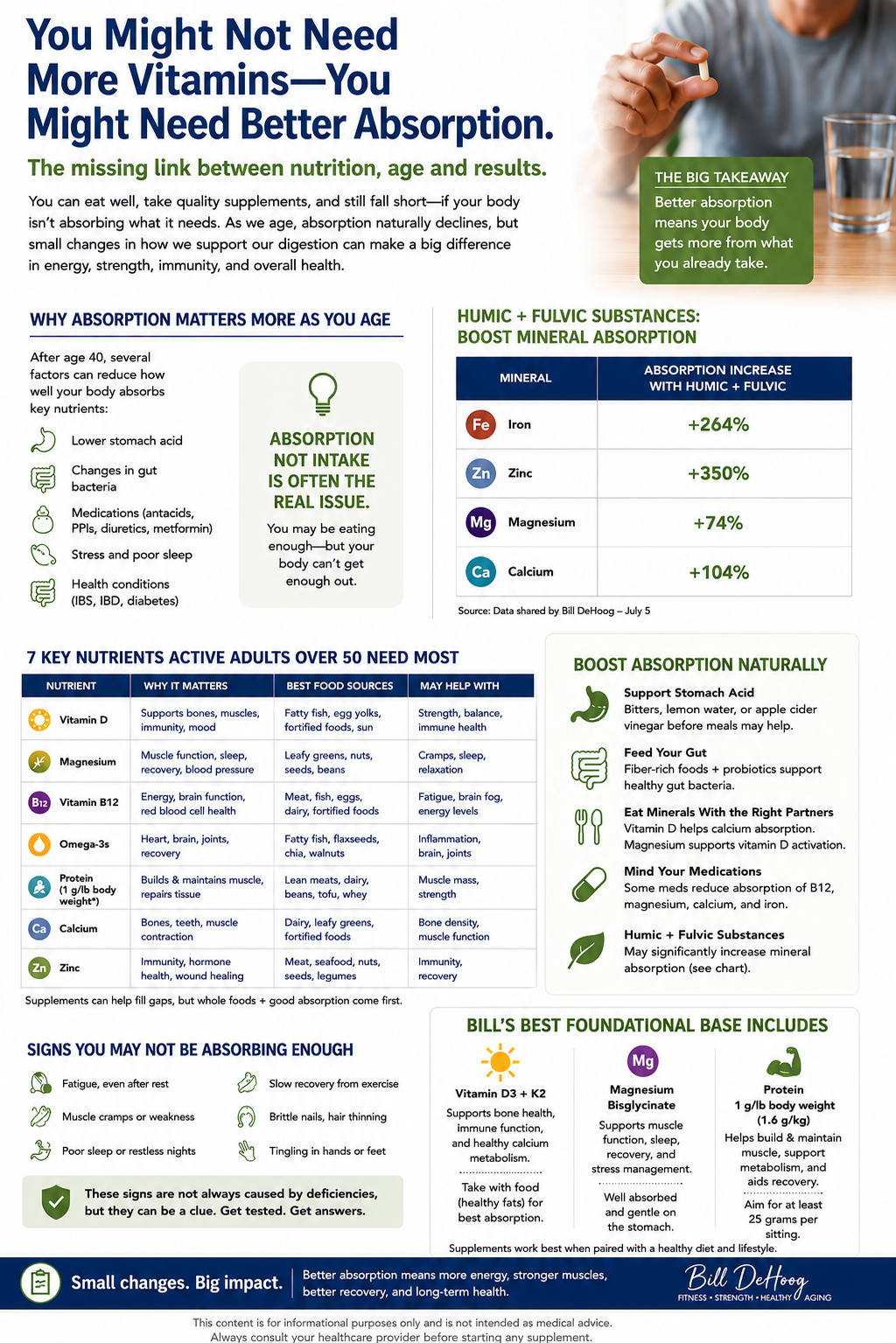
As we age, several nutrients become especially important for maintaining strength, mobility, energy, and overall health. Keep reading below for a helpful cheatsheet to save!
☀️ Vitamin D (D3 + K2)
Since many Canadians don't get enough sunlight throughout the year, vitamin D supplementation is commonly recommended.
Pairing Vitamin D3 with Vitamin K2 helps support healthy calcium metabolism by encouraging calcium to be used where it's needed most - your bones and teeth.
Bill’s Tip: Take Vitamin D3 + K2 with a meal that contains healthy fats to help improve absorption.
💪 Magnesium Bisglycinate
Magnesium is involved in hundreds of processes throughout the body, including muscle function, nerve health, energy production, sleep quality, and recovery after exercise.
Many people don't get enough magnesium through diet alone, and certain medications, stress, and aging can further reduce magnesium levels.
Bill’s Tip: Magnesium bisglycinate is a form that's well absorbed and generally gentle on the stomach, making it a popular choice for supporting overall health.
💪 Vitamin B12
Vitamin B12 helps produce healthy red blood cells and supports brain and nerve function.
Unfortunately, absorption naturally decreases with age because stomach acid is required to release B12 from food.
🍗 Prioritize Protein
Protein becomes even more important as we age because it helps maintain muscle mass, strength, recovery, and healthy metabolism.
A practical goal for active adults is approximately 1.6 grams of protein per kilogram of body weight (about 0.7–0.8 grams per pound). Some athletes or individuals with specific goals may require more, but this is a solid target for many healthy adults.
Rather than eating most of your protein at dinner, aim to spread it throughout the day.
A simple rule of thumb: Try to include at least 25 grams of high-quality protein at each meal to help maximize muscle protein synthesis and support healthy aging.
💪 Omega-3 Fatty Acids
Omega-3s help support:
Heart health
Brain function
Joint health
Recovery from exercise
Fatty fish remain one of the best dietary sources.
💪 Calcium
Calcium isn't just important for bones.
It also supports:
Muscle contraction
Nerve function
Heart rhythm
But calcium doesn't work alone.
Vitamin D and magnesium are essential partners that help the body absorb and use calcium effectively.
💪 Zinc
Zinc supports:
Immune function
Wound healing
Hormone production
Protein synthesis
Foods such as seafood, lean meats, legumes, nuts, and seeds provide excellent sources!
Could Your Medications Affect Absorption?
Absolutely. Many common medications can interfere with nutrient absorption.
Examples include:
Acid-reducing medications
Some diabetes medications
Certain blood pressure medications
Long-term diuretic use
This doesn't mean you should stop taking them - it simply means it's worth discussing your nutritional status with your healthcare provider during routine checkups.
Humic and Fulvic Substances: A Growing Area of Interest
Humic and fulvic substances are naturally occurring compounds formed as plants and organic matter break down over time. They are found in healthy soils, compost, peat, and some natural water sources, and have become an area of growing interest in nutrition research.
Researchers continue exploring naturally occurring humic and fulvic substances for their potential role in improving mineral absorption by:
Supporting the transport of minerals across the intestinal wall.
Helping minerals remain in forms that are easier for the body to absorb.
Supporting a healthy gut environment, where nutrient absorption takes place.
Acting as natural carriers that may improve the bioavailability of certain nutrients.
Studies suggest they may help improve the absorption of minerals such as:
Iron
Zinc
Magnesium
Calcium
These findings are encouraging because these minerals play essential roles in energy production, muscle function, immune health, bone strength, and overall wellness.
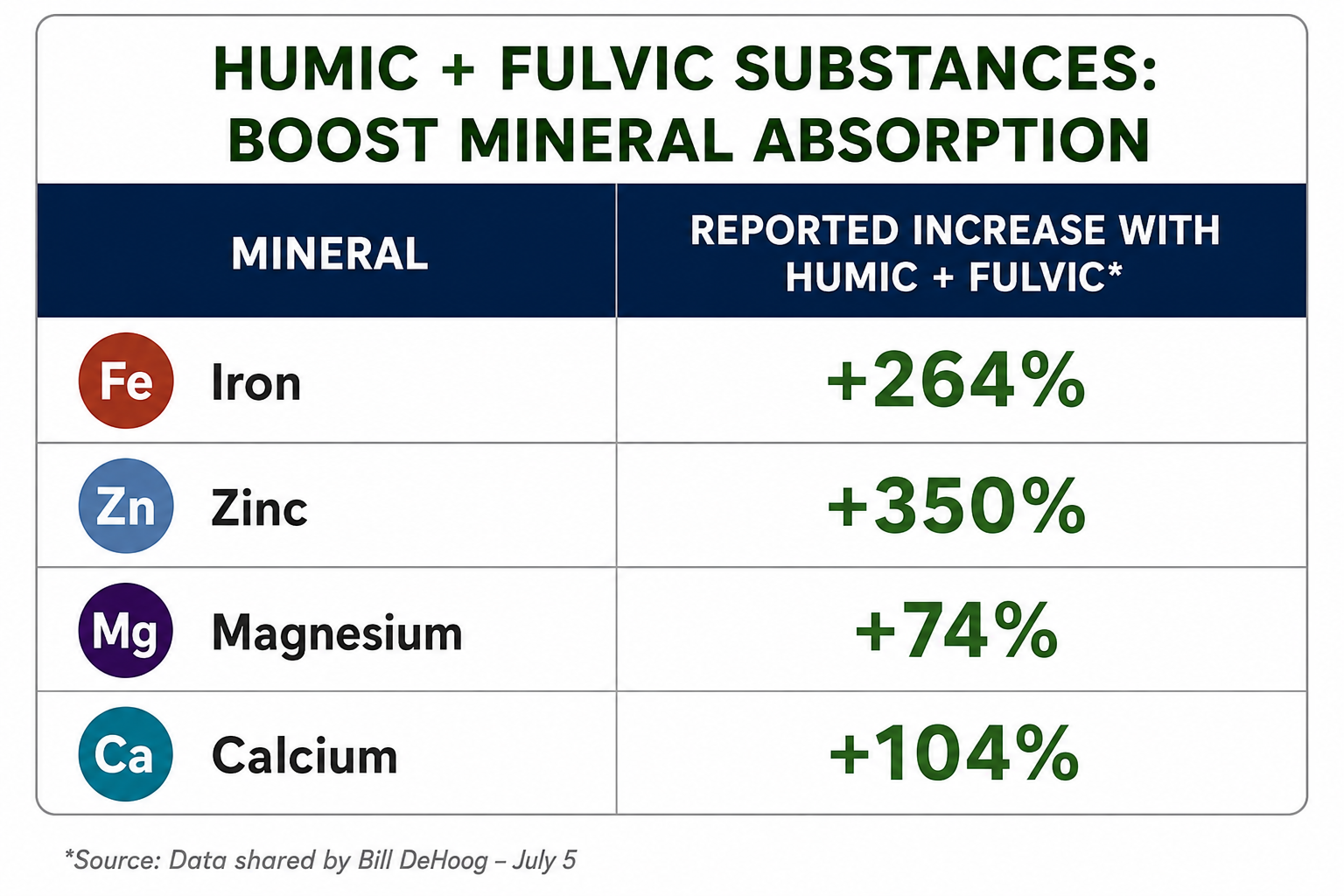
While these findings are promising, humic and fulvic substances should be viewed as one potential tool - not a replacement for a balanced diet, regular exercise, healthy digestion, and medical advice.
Five Simple Ways to Improve Nutrient Absorption Naturally
1. Eat Real, Whole Foods
A diet rich in vegetables, fruits, lean protein, legumes, nuts, seeds, and whole grains naturally provides vitamins, minerals, fibre, and beneficial plant compounds that work together.
2. Support Your Gut
A healthy digestive system helps absorb nutrients more efficiently.
Focus on:
Fibre-rich foods
Fermented foods like yogurt or kefir
Adequate hydration
Regular physical activity
3. Pair Nutrients Together
Some nutrients help each other work better.
For example:
Vitamin D supports calcium absorption.
Vitamin C improves iron absorption from plant foods.
Healthy fats help absorb vitamins A, D, E, and K.
4. Build Muscle
Resistance training doesn't just strengthen muscles - it also improves how your body uses protein and other nutrients.
Strength training remains one of the best investments you can make for healthy aging.
5. Don't Guess - Get Tested
If you're constantly tired, recovering slowly, or struggling with muscle weakness, speak with your healthcare provider.
Blood work can identify deficiencies such as vitamin D, B12, or iron and help determine whether supplementation is appropriate. Connect with Bill if you’d like to learn more about his testing resources!
Food First. Supplements Second.
Supplements can absolutely play an important role when there's a true deficiency or increased need.
But no supplement can replace:
A nutrient-rich diet
Regular strength training
Quality sleep
Good digestive health
Consistent movement
Think of supplements as filling the gaps - not forming the foundation.
The Bottom Line
Many people assume they simply need more vitamins.
In reality, they may need their body to use those vitamins more effectively.
Supporting nutrient absorption through healthy digestion, smart nutrition, regular exercise, and targeted supplementation - when appropriate - can have a meaningful impact on energy, strength, recovery, and healthy aging.
Instead of asking, "What supplement should I take next?"
Try asking,
"How can I help my body get more from what I'm already giving it?"
That small shift in thinking could make all the difference!
About Bill DeHoog Fitness
At Bill DeHoog Fitness, healthy aging goes far beyond exercise. It means building strength, supporting brain health, eating well, and helping your body perform at its best for years to come. Through evidence-based fitness and practical lifestyle education, Bill helps adults stay stronger, more active, and healthier at every stage of life.